Why Washington Rowhouses Face Unique Waterproofing Challenges
Rowhouses are the backbone of Washington neighborhoods, from Capitol Hill to Shaw to Petworth. They are beautiful, historic, and notoriously tricky when it comes to keeping water out of the basement. Unlike a suburban home with open yard on all four sides, a rowhouse shares walls with its neighbors, often sits on a shallow lot, and may have a rear patio or light well instead of a proper lawn. That means the usual exterior excavation approach is not always possible, or at least not without coordinating with neighbors and navigating tight access.
On top of the layout, Washington's climate adds pressure. Summers bring heavy, sudden thunderstorms, and the region's clay-heavy soils do not drain quickly. Water piles up against foundations, finds old mortar joints, and seeps into basements that were built long before modern waterproofing standards existed. Homeowners in Arlington and Alexandria see the same pattern. Understanding your rowhouse's specific constraints is the first step toward choosing between interior and exterior solutions.
Interior vs Exterior Waterproofing: The Core Difference
When people ask about interior vs exterior waterproofing, they are really asking where the water is stopped. Exterior Basement Waterproofing tackles the problem from the soil side. It typically involves excavating down to the footing, applying a waterproof membrane to the foundation wall, installing drainage, and backfilling with gravel that directs water away. Done well, it keeps water from ever touching the wall. The catch is access and cost: digging around a rowhouse often means hand excavation in tight spaces, moving patios, and sometimes working within inches of a neighbor's property.
Interior waterproofing takes the opposite approach. It accepts that some water will reach the foundation and manages it before it floods your floor. An Interior Drain Tile System is installed along the inside perimeter of the basement footing, collects water that enters through the wall-floor joint, and routes it to a sump pump that discharges it outside. A dimpled membrane on the wall can direct seepage down to the drain tile. For rowhouses, this is often the more practical path because it requires no digging outside and no neighbor negotiations. Neither method is universally better. The right choice depends on your foundation, your access, and how the water is entering.
Drain Tile vs Membrane: What Each System Actually Does
The phrase drain tile vs membrane gets used loosely, so it helps to separate the two. Drain tile (sometimes called a footer drain or perimeter drain) is the collection system. It is a perforated pipe or a channel system that sits at the base of the foundation and carries water to a sump pit. A membrane is a barrier. On the exterior, it is a sheet applied to the foundation wall to block water and protect against hydrostatic pressure. On the interior, a dimpled plastic membrane creates a gap between the damp wall and your finished space, letting water drain down to the tile instead of soaking into drywall or paint.
In a Washington rowhouse, you will often see the best results from combining both concepts on the interior: a wall membrane plus a perimeter drain tile feeding a reliable sump pump. That combination handles the most common rowhouse problem, which is water entering at the cove joint where the wall meets the floor. If your issue is a failed exterior coating or a downspout dumping water right at the foundation, exterior repairs or grading fixes may be enough. A professional assessment should identify the actual entry points rather than guessing. For a tailored look at your property, you can request a free estimate and get a clear recommendation.
Which Approach Fits a Rowhouse Basement Waterproofing Project?
For most rowhouse basement waterproofing projects in dense DC neighborhoods, interior systems win on practicality. There is no excavation permit headache, no risk of undermining a shared wall, and no need to remove a prized rear patio. The work happens inside, usually in a few days, and the basement stays usable. Interior systems also address the most common rowhouse leak pattern directly. If your basement is finished or you plan to finish it, an interior membrane and drain tile protect the investment without disturbing the exterior.
That said, Foundation Waterproofing from the exterior still has a place. If the foundation wall itself is bowing, if there is significant structural damage, or if you have the rare rowhouse with open access on multiple sides, exterior work may be the more durable fix. Some homeowners combine approaches: exterior grading and downspout corrections to reduce water load, plus an interior drain tile system to manage what still gets through. A good contractor will explain the tradeoffs honestly rather than pushing one method for every house. Washington Waterproofing serves rowhouse owners across the city and can walk you through the options for your specific block.
Basement Waterproofing Cost in Washington: What to Budget
Homeowners researching pricing should know that interior and exterior systems carry very different price tags. Interior drain tile with a sump pump is generally the more budget-friendly route, and it is the one that fits most rowhouses. Exterior excavation costs more because of labor, access challenges, and restoration of patios, walkways, and landscaping. In a dense urban setting, those access issues can push exterior costs up further. A small, straightforward interior job is at the lower end, while a full-perimeter exterior project on a constrained lot sits at the higher end.
Rather than quoting a single number that will not fit every home, a reputable contractor will assess your foundation, drainage, and access, then provide a written scope. Be cautious of any company that quotes over the phone without seeing the basement. Ask what is included: sump pump, discharge line, membrane, vapor barrier, and cleanup. Also ask about warranty terms. The cheapest bid is rarely the best value if it skips the sump pump or uses undersized pipe. For a realistic figure for your rowhouse, call (771) 240-2593 or request a free estimate.
Basement Waterproofing Near Me: When to Call a Pro
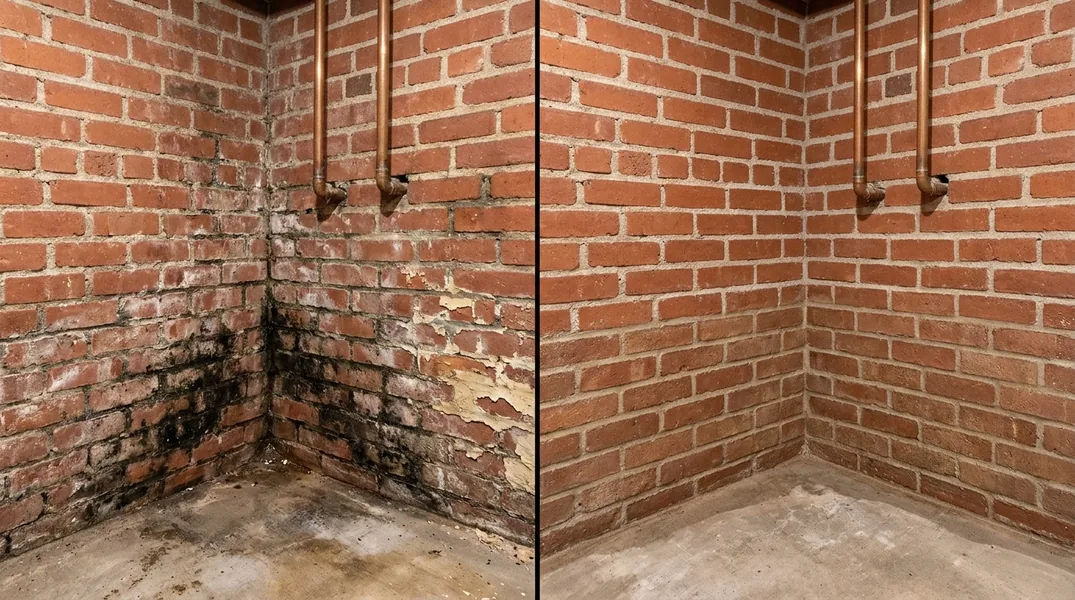
If you are searching for basement waterproofing near me, you have probably already noticed the warning signs: a musty smell, white powdery efflorescence on the walls, damp patches after rain, or water pooling at the base of the wall. In a rowhouse, these symptoms often point to the cove joint or to water coming through porous brick and mortar. Small fixes like extending downspouts and regrading a rear patio can help, but persistent seepage usually needs a system, not a patch.
Call a professional when you see standing water, when the basement smells damp even in dry weather, or when you are planning to finish the space and want protection before drywall goes up. Washington Waterproofing works throughout Washington and nearby communities like Silver Spring, and can help you decide whether interior or exterior waterproofing is the right fit for your rowhouse. Reach out at (771) 240-2593 to schedule an assessment and get clear, honest guidance before you spend a dime.
Looking for a professional basement waterproofing contractor in Washington? Washington Waterproofing responds fast for all your basement waterproofing needs.
Get a Free QuoteOur services: Basement Waterproofing · Interior Drain Tile System · Exterior Basement Waterproofing