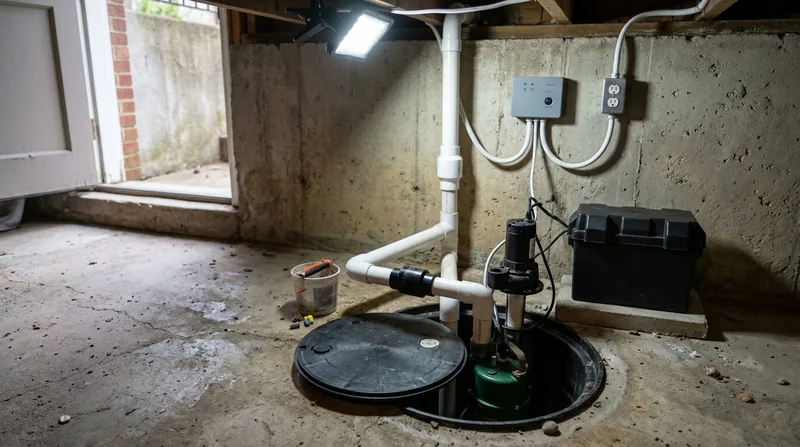




Washington sits right on the fall line, where Piedmont schist and clay meet the Atlantic Coastal Plain, and that geology decides how water moves under your house. In Capitol Hill and Georgetown, 1880s brick rowhouses with English basements sit on old brick or rubble-stone foundations that hold water against the wall. Out in Bloomingdale and LeDroit Park, buried streams and flash flooding have pushed water into basements for a century. When the power drops during a summer downpour or a remnant tropical storm, a sump pump with no backup stops dead in a full basin. Battery Backup Sump Pumps in Washington keep the pump running when the grid does not, and we size the battery, charger and alarm to the pit you actually have. If your primary pump is aging or undersized, start with our sump pump installation and replacement page before adding backup.
Why a Backup Pump Matters in Washington's Storm Season
Washington's failure mode is the summer thunderstorm and the remnant tropical system, not a gentle coastal drizzle. A single storm can drop two inches in an hour on clay soil that will not absorb it, and the water table in low spots along the Potomac, Anacostia and Rock Creek rises fast. The power usually goes out at the same moment the basin fills, which is exactly when a primary pump has nothing left to give. Homes in Bloomingdale and LeDroit Park have taken repeated flash flooding, and a battery backup is the difference between a wet floor and a dry one.
- A battery backup runs the pump on DC power when the grid fails, so the basin keeps draining during an outage.
- It also covers the short cycles when a breaker trips or the primary pump overheats and shuts down.
- An alarm sounds before the water reaches the floor, giving you time to act instead of discovering the flood later.
- It protects the investment you already made in an interior perimeter drain and sump basin.
A backup is not a substitute for a working primary pump or a clear discharge line, and we tell you plainly when the real fix is drainage, not hardware.
Key info: In Bloomingdale and LeDroit Park, the storm sewer can surcharge during a flash flood, and a sump discharge line tied into the sanitary connection can back up. We check where your discharge actually goes before we add a backup, because pumping into a surcharging line defeats the purpose.
For the official word on stormwater and floodplain rules in the District, the DC Department of Energy and Environment publishes guidance homeowners can check directly.
How We Install a Battery Backup in a Washington Basement
Every install starts with the pit and the pump, because a backup sized wrong is worse than none. In a Cleveland Park Tudor or a Takoma Park bungalow, the basin is often a tight cast-in-place pit under a finished floor, and access decides the hardware. We measure the basin, check the primary pump's float and check valve, and confirm the discharge line runs to a lawful point before we quote anything. You can see the full scope on our interior drain tile system page, since the backup protects that whole system.
- We inspect the sump basin, primary pump, check valve and discharge line, and note any debris or short-cycling.
- We size the battery and charger to the pump's draw and the pit's volume, not to a generic box.
- We mount the backup pump and float at the correct height so it engages before the water reaches the floor.
- We wire the charger to a dedicated circuit and test the system under load with the primary pump off.
- We set the alarm and walk you through the monthly test and the battery replacement interval.
We leave the pit cleaner than we found it and we do not sell a battery you do not need.
Key info: In a 1950s split-level in Hyattsville or Annandale, the basin often sits in a partly finished basement with the discharge running to a window well. If that well has no drain, the backup will just move water back against the wall. We check window well drainage at the same visit.
Backup Pump Options We Install
The right choice depends on your pit, your primary pump and how long outages last in your block. We carry several approaches so the system matches the house rather than a catalog page.
| Approach | Description | Best for |
|---|---|---|
| DC battery backup pump | A separate DC pump and float set in the same basin, with a charger and alarm. | Most rowhouses and bungalows with a single primary pump. |
| Combination primary and backup unit | One housing with an AC primary and a DC backup and a shared discharge. | Tight pits under finished floors in Cleveland Park and Takoma Park. |
| Extended battery and second battery | Larger amp-hour capacity for outages that run past a few hours. | Low spots along the Anacostia where outages last longer. |
| Alarm and high-water switch | A float switch that sounds before the water reaches the floor. | Finished basements in Bethesda and Arlington. |
We test every configuration with the primary pump disabled so you see it work before we leave.
Battery Backup Sump Pumps Cost in Washington: What to Expect
Most battery backup installations start from $900, and that figure covers a DC backup pump, a charger, a float and a test under load. The price moves with battery capacity, whether the pit needs cleaning or relining, and whether the discharge line has to be rerouted. A combination unit in a tight pit costs more than a separate backup in an open basin, and an extended battery adds to either. We give you a written number after we see the pit, not before.
Getting two or three estimates is smart here because the scope varies so much between contractors. One quote may include a battery and another may not, and a cheap number that skips the check valve or the alarm is not a bargain. Ask each contractor what happens to the discharge line during a storm sewer surcharge, and compare the answers. Our full pricing overview lays out the line items so you can compare like for like.
Key info: A homeowner in Silver Spring was quoted a low figure that turned out to be the pump only, with no battery and no charger. The real installed number was closer to the range above. Ask what the quote includes before you compare totals.
Battery Backup Sump Pumps Near Me: Hiring a Contractor Near Washington
When you search for battery backup sump pumps near me, you get a mix of plumbers, general handymen and waterproofing specialists. A plumber can swap a pump, but the diagnosis of why the basin fills during a storm belongs to a below-grade specialist. Ask whether the contractor is licensed and insured, and ask for the certificate rather than a verbal yes. Ask for references from homes like yours, especially rowhouses with English basements or 1950s ranches with a finished basement.
- Confirm the contractor is licensed and insured, and request the certificate before work starts.
- Get two or three written estimates that list the pump, battery, charger, alarm and labor separately.
- Ask for references from Washington, Takoma Park or Hyattsville homes with a similar pit and foundation.
- Ask who pulls any permit if the discharge connection changes, and confirm the local building department's rule in writing.
- Check for a written, transferable warranty on the hardware and the labor.
Permits for work that alters a sump discharge connection vary by jurisdiction, so we defer to the local building department and put the answer in writing. You can reach us through our contact page to schedule a free basement inspection and get a straight answer on what your pit needs.
Battery Backup Sump Pumps in Washington: Pricing Guide
| Service | Price | Details |
|---|---|---|
| DC backup pump with charger and float | Starting at $900 | Includes pump, charger, float, alarm and load test; battery capacity moves the price. |
| Combination primary and backup unit | Starting at $1,250 | One housing for AC primary and DC backup; tight pit access in rowhouses raises labor. |
| Extended battery or second battery | Starting at $1,450 | Larger amp-hour capacity for long outages; discharge rerouting may add cost. |
| Alarm and high-water switch only | Starting at $350 | Float switch and alarm added to an existing backup; pit condition affects the total. |
| Complex or large-scale job | On estimate | Pit relining, discharge rerouting or multiple basins need an on-site look first. |
| Estimate | Free | Response within 24h at (771) 240-2593, no obligation to book. |
Indicative pricing, the exact cost depends on square footage, finish, and site access. Free personalized estimate within 24h at (771) 240-2593.


