



Foundation Waterproofing in Washington: Built for Brick, Clay and High Water Tables
Washington sits right on the fall line between Piedmont schist and the Atlantic Coastal Plain, and that geology shows up in every basement from Georgetown to Brookland. Pre-1920 rowhouses carry English basements and full cellars on old brick or rubble-stone footings, while 1950s brick ranches in Hyattsville and 1990s walkouts in Bowie sit on heavy glacial clay that holds water like a bathtub. When the summer downpours hit, or a remnant tropical storm pushes up the Potomac and the Anacostia, hydrostatic pressure finds every cold joint, every mortar joint and every crack. Our Foundation Waterproofing in Washington work is built around that reality: we read the foundation type first, then match the treatment to it instead of selling one system to every house. If water is already coming in, start with a basement waterproofing assessment before anything gets sealed.
Why Foundation Waterproofing Matters in Washington's Old Rowhouse Belt
Capitol Hill, Petworth, Columbia Heights and Bloomingdale share the same problem: brick and rubble-stone foundations laid before 1930, with no footing drain and no waterproof membrane, sitting on clay that swells with every wet season. Add buried streams and springs under Bloomingdale and LeDroit Park and you get the flash flooding those neighborhoods know too well. The failure mode that dominates here is hydrostatic pressure pushing water through mortar joints, not a single obvious crack.
- Efflorescence and white salt staining on the inside face of brick tells you moisture is moving through the wall, not just condensing on it.
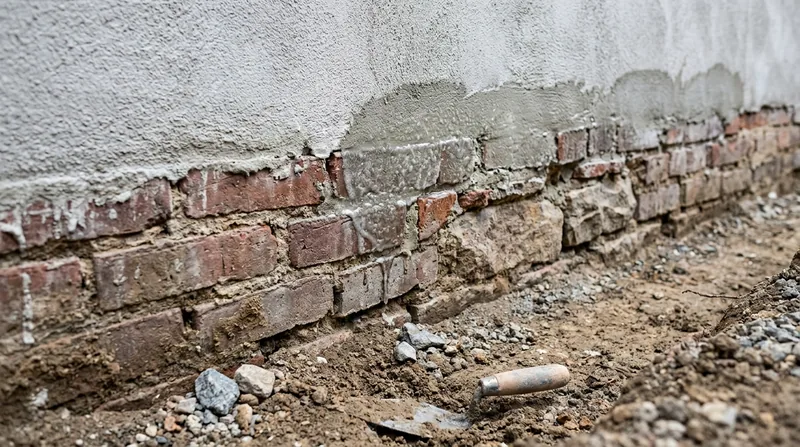
- Rubble-stone cellars in Georgetown and Capitol Hill need breathable parging and repointing, because a hard cement skin traps water and spalls the stone.
- 1920s to 1940s Tudors and Colonials in Cleveland Park, Takoma Park and Arlington often have deep basements with original drain tile that has long since silted shut.
- Poured walkout foundations in Bowie, Fairfax and Reston fail at the cold joint and tie holes, especially on the uphill side where hillside runoff piles up.
- Freeze-thaw winters open hairline cracks that seep every spring, even when the wall looks sound in October.
We inspect the wall type, the grading and the downspout discharge before we quote a single method, because the fix for a rubble-stone cellar is not the fix for a poured wall.
Key info: A 1912 rowhouse in Bloomingdale with a rubble-stone foundation and a wet floor after every storm usually needs interior drainage and a sump basin, not exterior excavation. A 1960s split-level in Annandale with one vertical crack needs epoxy or polyurethane injection and nothing more. We tell you which one you have.
For permit questions on structural repair, the DC Department of Buildings is the authority to check, and rules vary by jurisdiction across the Maryland and Virginia suburbs.
Official permit guidance: DC Department of Buildings.
How We Waterproof a Washington Foundation, Step by Step
Every job starts with a free basement inspection where we map the wall type, check the water table evidence in the sump basin, and trace where the downspouts actually dump. From there we choose between interior drainage, exterior membrane work, crack injection or breathable masonry treatment. No two foundations in this city take the same route, and we do not force an exterior dig on a property where an interior system solves the pressure problem for less.
- We inspect the foundation, the grading and the drain tile condition, then explain what we found in plain terms.
- We correct the water source first: downspout extensions, window well drainage and grading away from the wall.
- We repair cracks with epoxy injection for structural cracks or polyurethane injection for active leaks, using injection ports set along the crack.
- We install an interior perimeter drain and sump basin where hydrostatic pressure is the driver, tied to a discharge line with a check valve.
- We apply the right wall treatment: breathable parging and repointing on old brick, dimple board or waterproof membrane on poured walls.
- We test the system with water before we leave and walk you through the sump pump and backup setup.
If your existing drain tile is silted or collapsed, our drain tile repair and replacement service picks up where the inspection leaves off.
Key info: On a 1938 Colonial in Silver Spring, we found the original footing drain packed solid with clay and roots. We cut in an interior perimeter drain, set a new sump basin in the low corner, and ran the discharge line out to the alley. The basement floor stayed dry through the next July storm.
Foundation Waterproofing Methods We Use in Washington
| Approach | Description | Best for |
|---|---|---|
| Epoxy injection | Structural cracks in poured or block walls are filled under pressure and bonded back together. | Non-moving vertical cracks in poured walkout basements in Bowie and Fairfax. |
| Polyurethane injection | Flexible foam expands into active leaks and seals wet cracks that epoxy cannot hold. | Seeping hairline cracks and cold joints in 1950s split-levels in Hyattsville and Annandale. |
| Interior perimeter drain | A drain channel cut along the footing relieves hydrostatic pressure and routes water to a sump basin. | Rubble-stone and brick cellars in Capitol Hill, Petworth and Bloomingdale with no working footing drain. |
| Exterior membrane and dimple board | We excavate, repair the wall, apply a waterproof membrane and dimple board, then backfill with drainage stone. | Poured and block walls with failing exterior coating and room to dig, common in Bethesda and Rockville. |
| Breathable parging and repointing | Lime-based mortar repairs let old masonry dry outward instead of trapping moisture behind a hard skin. | Pre-1920 brick and stone foundations in Georgetown and Brookland where cement parging has spalled. |
Foundation Waterproofing Cost in Washington: What to Expect
Most foundation waterproofing work in the Washington metro starts around From $3,500, and that figure covers a focused scope such as crack injection, targeted parging or a partial drainage correction. The number climbs with the size of the foundation, the access to the wall, and whether we are cutting a full interior perimeter drain versus sealing one crack. A rubble-stone cellar in Georgetown that needs repointing, drainage and a sump basin lands well above the starting point, while a single injected crack in a Takoma Park bungalow sits near it.
Access matters more than homeowners expect: a rowhouse with a rear alley and a narrow areaway takes more labor than a suburban lot with a wide side yard. Foundation type matters too, because brick and stone require hand work that poured concrete does not. We recommend getting two or three written estimates with the same scope spelled out, so you compare methods and not just totals.
Our full pricing overview breaks down the ranges by method.
Foundation Waterproofing Near Me: How to Vet a Contractor Near Washington
Searching for foundation waterproofing near me in Washington returns a lot of general foundation-repair firms and plumbers who treat the symptom and leave the pressure problem in place. A dedicated waterproofing contractor reads the wall type, understands the difference between a structural crack and a hydrostatic leak, and will tell you when a simple seal is genuinely enough. Ask for the license and insurance certificate before work starts, and confirm the permit path with the local building department, since structural repair and drainage changes can trigger one.
- Confirm the contractor is licensed and insured, and ask for the certificate, not just a verbal yes.
- Get two or three written estimates that list the method, the materials and the warranty terms in the same format.
- Ask for references from nearby jobs on the same foundation type, brick and stone work differently from poured concrete.
- Check the permit requirements with the local building department, since rules vary between DC, Maryland and Virginia jurisdictions.
- Ask how the discharge line is handled, because altering drainage or the sanitary connection often needs approval.
- Read the warranty terms and confirm whether they transfer to a future owner.
When you are ready to compare scopes, reach out through our contact page and we will schedule a free inspection.
We also serve Alexandria, Arlington, Silver Spring and Bethesda, and you can see the neighborhood breakdown on our service areas page.
Foundation Waterproofing in Washington: Pricing Guide
| Service | Price | Details |
|---|---|---|
| Crack injection (epoxy or polyurethane) | Starting at $3,500 | Covers a focused crack repair with injection ports, materials and testing, priced by crack length and wall type. |
| Interior perimeter drain and sump basin | Starting at $6,500 | Includes drain channel, sump basin, pump and discharge line, with linear footage and access driving the total. |
| Exterior membrane and dimple board | On estimate | Excavation depth, wall length and site access need an on-site look before a number is given. |
| Masonry repointing and breathable parging | Starting at $4,200 | Hand repair of brick or rubble-stone walls, priced by square footage and how much cement parging must come off. |
| Travel | Included | In Washington and surrounding areas, no separate call-out or mileage fee. |
| Estimate | Free | Response within 24h at (771) 240-2593, no obligation to book. |
Indicative pricing, the exact cost depends on square footage, finish, and site access. Free personalized estimate within 24h at (771) 240-2593.


