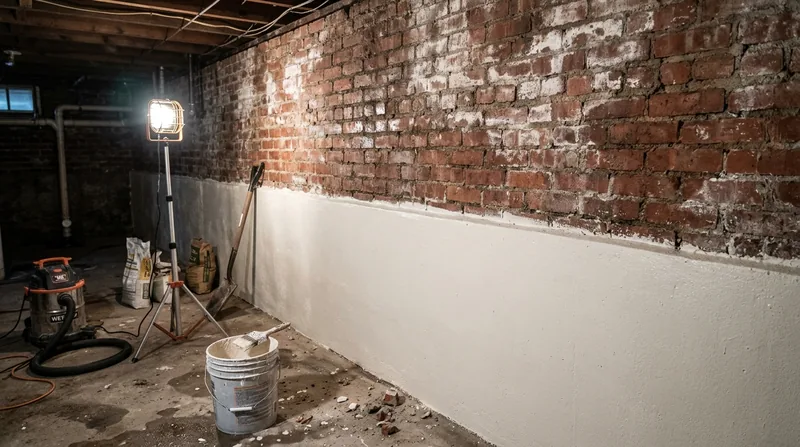




Washington sits right on the fall line, where Piedmont schist and clay meet the Atlantic Coastal Plain, and that geology decides how basement walls behave. In Capitol Hill, Georgetown and Petworth, 1880s to 1920s brick rowhouses sit on old brick or rubble-stone foundations with English basements that have been wicking ground moisture for a century. Out in Bloomingdale and LeDroit Park, buried streams and a high water table push water against downhill walls after every summer downpour. Across Cleveland Park, Takoma Park and Arlington, deeper basements in 1920s to 1940s brick homes show the same story: white efflorescence, damp patches, a musty smell that never quite leaves. Basement Wall Sealing in Washington is the right first move for damp masonry, but only when the wall is damp, not when hydrostatic pressure is driving water through it. We tell you which one you have before we sell you anything. Start with a free basement inspection and we will map the moisture source wall by wall.
Why Basement Wall Sealing Matters in Washington's Old Brick and Clay
Most of the dampness we see in Washington comes from two different problems that homeowners lump together. The first is capillary suction: old brick and mortar pull ground moisture up and hold it, so the wall reads damp and cold and blooms with efflorescence. The second is hydrostatic pressure: saturated glacial clay soil pushes water hard against the wall and it finds the mortar joints and cracks. A sealer fixes the first. Nothing painted on the inside fixes the second, and we say so plainly.
- Rubble-stone and soft brick foundations in Georgetown and Capitol Hill absorb water like a sponge and need breathable sealing, not a plastic skin that traps moisture.
- Hillside homes in Mount Rainier and Takoma Park take runoff against downhill walls that no surface sealer will stop.
- 1950s and 1960s brick ranches across Hyattsville and Annandale often have parging that has cracked and let water reach the block behind it.
- Poured walkout basements in Bowie and Fairfax show cold joints and tie holes that leak under pressure, which is a crack repair job, not a sealing job.
If your wall is damp to the touch but not streaming after rain, sealing is a sensible, affordable fix. If water runs, puddles, or pushes the wall, we redirect you to the right system.
Key info: A homeowner in Bloomingdale called us about a wet wall after a July storm. The wall was damp and blooming with efflorescence, but there was no running water. Sealing and grading correction solved it for a fraction of what an interior drain would have cost. Two blocks away, a home with water actually pooling on the floor needed an interior drain tile system, not sealer.
Washington's building department rules on structural and drainage work vary by jurisdiction, so confirm permit thresholds with your local building department before any work that alters drainage.
For official guidance on permits and contractor licensing in the District, check the DC Department of Buildings.
How We Seal Basement Walls in Washington, Step by Step
We do not sell sealer as a cure-all. Our process starts with finding out why the wall is wet, because sealing a wall that is under hydrostatic pressure just traps water behind a film and it comes back through the mortar. On a typical Washington rowhouse or Colonial, the work runs in a fixed order so the sealer bonds to sound masonry and not to efflorescence or old paint.
- We inspect the wall, the footing line, the grading outside and the downspout discharge to separate dampness from pressure.
- We wire-brush and scrape loose mortar, failing parging and old coatings so the surface is sound.
- We remove efflorescence with a masonry cleaner and let the wall dry to a stable moisture reading.
- We fill cracks and open mortar joints with hydraulic cement or a compatible patch before any coating goes on.
- We apply a penetrating sealer on brick and rubble-stone walls, or a flexible membrane on poured walls where movement is likely.
- We correct grading and extend downspouts so roof water stops soaking the soil against the wall.
The sealer is only as good as the prep and the drainage correction around it, which is why we never skip the outside work.
Key info: On a 1920s brick Tudor in Cleveland Park, the wall was damp but dry to the touch after rain. We removed chalky efflorescence, repointed two mortar joints, applied a breathable penetrating sealer and extended the downspouts six feet. No excavation, no drain tile, and the wall stayed dry through the next freeze-thaw winter. That is what honest sealing looks like.
If the inspection shows a real water-volume problem, we point you to basement waterproofing rather than take sealing money for a problem sealer cannot solve.
Sealing Approaches We Use on Washington Basement Walls
Not every wall takes the same product. Old brick and rubble-stone need to breathe, poured concrete can take a membrane, and a wall that is actively leaking needs crack injection before any surface coating. This table shows what we use and when.
| Approach | Description | Best for |
|---|---|---|
| Penetrating sealer | Soaks into the masonry and blocks capillary suction while staying breathable. | Damp brick and rubble-stone walls in Georgetown and Capitol Hill. |
| Flexible membrane coating | A rubberized film that bridges hairline movement on poured walls. | Poured walkout basements in Bowie and Fairfax. |
| Crack injection first | Epoxy or polyurethane injection through ports to stop active leaks. | Leaking cold joints and tie holes before any sealer. |
| Parging repair plus sealer | Replacing failed parging and sealing the sound block behind it. | 1950s and 1960s block walls in Hyattsville and Annandale. |
| Drainage correction | Regrading soil and extending downspouts to cut the water source. | Any wall where roof water soaks the soil against it. |
When pressure is the real driver, we stop and explain why a sealer alone will fail, and what the correct system is.
Basement Wall Sealing Cost in Washington: What to Expect
Sealing is one of the lower-cost basement fixes, and we start most sealing jobs from $1,500. That figure covers a typical single-wall or partial-perimeter job with surface prep, efflorescence removal and a quality sealer. The number climbs when the wall needs repointing, when failed parging has to be rebuilt, or when the job is really crack injection plus sealing. Getting two or three estimates is smart because a low bid that skips prep will fail within a season, and a high bid that pushes a full drain system for a damp wall is overselling.
For a fuller breakdown of what drives the number, see our pricing overview.
Hiring a Basement Wall Sealing Contractor Near Me in Washington
Anyone can paint a wall. The contractor worth hiring will tell you when sealing is the wrong answer, and will show you the moisture readings that back up the recommendation. Use this checklist before you sign anything, whether you are in Silver Spring, Arlington or a rowhouse off H Street.
- Confirm the company is licensed and insured and ask for a certificate of insurance before work starts.
- Get two or three written estimates that list prep, product and drainage correction separately.
- Ask for references from jobs like yours, especially old brick or rubble-stone foundations.
- Ask whether the work needs a permit for structural or drainage changes, and check with your local building department.
- Ask how the contractor will handle grading and downspouts, because sealer alone will not stop water that keeps soaking the soil.
If a contractor promises a lifetime warranty or skips the moisture readings, walk away and call someone else.
Ready to find out whether your wall needs sealing or a drainage system? Contact us and we will schedule a free inspection at (771) 240-2593.
Basement Wall Sealing in Washington: Pricing Guide
| Service | Price | Details |
|---|---|---|
| Single wall sealing | Starting at $1,500 | Includes surface prep, efflorescence removal and one quality sealer coat on a typical wall. |
| Full perimeter sealing | Starting at $2,800 | Covers all basement walls with prep and sealer; price moves with wall length and access. |
| Crack injection plus sealing | Starting at $2,200 | Epoxy or polyurethane injection on active leaks before sealer; number of cracks drives the price. |
| Parging repair plus sealing | On estimate | Failed parging must be rebuilt before sealing, so we inspect the wall before quoting. |
| Travel | Included | In Washington and surrounding areas, no separate call-out or mileage fee. |
| Estimate | Free | Response within 24h at (771) 240-2593, no obligation to book. |
Indicative pricing, the exact cost depends on square footage, finish, and site access. Free personalized estimate within 24h at (771) 240-2593.


