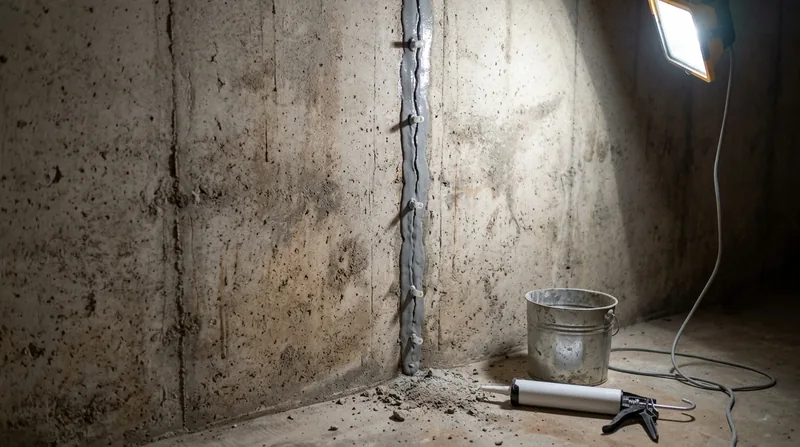




Washington sits on the fall line where Piedmont schist and clay meet the Atlantic Coastal Plain, and that geology shows up in every basement from Georgetown to Brookland. The 1880s brick rowhouses of Capitol Hill and Bloomingdale sit on old brick and rubble-stone foundations that have been wicking moisture for a century, while the 1920s Tudors and Colonials of Cleveland Park and Takoma Park carry deep basements pressed by heavy glacial clay that swells every wet season. Foundation crack repair in Washington starts with reading the crack, not with a tube of caulk: a hairline shrinkage crack in a 1950s Hyattsville ranch is a different animal from a stair-step crack in a bowing wall in Petworth. We inspect the crack width, the wall material, and the water path behind it, then match the repair to the cause. If you want the full picture of how a crack fits into a wet basement, start with our basement waterproofing service and call (771) 240-2593 for a free inspection.
Why Foundation Cracks Open in Washington's Clay and Old Brick Foundations
Washington's heavy clay soil holds water like a sponge through the summer downpours and remnant tropical storms, then shrinks hard in a freeze-thaw winter. That constant swell-shrink cycle works on foundations year after year, and the result is the crack pattern we see across the district: vertical cracks at the corners of poured walls in Bowie and Fairfax, horizontal cracks low on the wall where hydrostatic pressure pushes in, and crumbling mortar joints in the rubble-stone cellars under Georgetown.
- Hydrostatic pressure builds when saturated clay cannot drain and pushes water against the wall until a crack opens.
- Differential settlement on the fall line shifts one side of a footing and tears stair-step cracks through brick.
- Freeze-thaw cycles widen existing hairline cracks as water freezes inside them each winter.
- Old brick and rubble-stone foundations in Capitol Hill and Bloomingdale crack along mortar joints that no longer bond.
- Downspout and grading failures dump roof water against the wall and accelerate everything above.
Reading which of these is at work is the difference between a repair that holds and a patch that fails by the next spring thaw.
Key info: In Bloomingdale and LeDroit Park, flash flooding has repeatedly pushed water against downhill walls. A crack that weeps only during those events is usually a hydrostatic problem, not a structural one, and sealing the crack alone will not stop it. Our foundation waterproofing page explains the difference.
For the permit side of structural foundation work, the DC Department of Buildings is the authority to check before any repair that alters structure: dob.dc.gov.
How We Repair Foundation Cracks in Washington, Step by Step
Every job begins with a free basement inspection, because a crack is a symptom and we need to see what is feeding it. We map the crack, check for efflorescence and wall movement, test the moisture behind the wall, and look at the footing drain and grading outside. Then we choose the method: injection for a stable non-structural crack, structural reinforcement for a moving or bowing wall, and drainage work when the water pressure is the real driver.
- We inspect the crack and the wall, measure width and movement, and photograph the water path.
- We clean the crack and drill injection ports at the correct spacing along its length.
- We inject epoxy for structural cracks that need to regain strength, or polyurethane for active leaks that need to seal and flex.
- We seal the surface, remove the ports, and check the repair under water pressure before we leave.
- When the crack is structural or the wall is bowing, we recommend carbon fiber straps or wall anchors instead of injection alone.
The method follows the diagnosis, which is why we do not quote injection over the phone for a crack we have not seen.
Key info: A 1940s brick Colonial in Takoma Park had a vertical crack weeping after every heavy rain. The crack was stable, so epoxy injection sealed it, but the water was coming from a failed footing drain. We repaired the crack and routed the water with an interior drain tile system, and the wall has stayed dry since.
Epoxy vs Polyurethane and Other Crack Repair Methods We Use
Not every crack wants the same treatment. A dry structural crack in a poured wall gets epoxy because it restores the wall's strength. An active leak in a brick or block wall gets polyurethane because it foams and seals while staying flexible. A wall that is actually moving needs reinforcement, and a wall that is wet because of drainage needs the water managed first. The table below shows how we match the method to the crack.
| Approach | Description | Best for |
|---|---|---|
| Epoxy injection | Structural resin injected under pressure that bonds the crack faces back together. | Dry, stable vertical or diagonal cracks in poured concrete walls. |
| Polyurethane injection | Flexible foam that expands and seals active leaks in wet cracks. | Leaking cracks in brick, block, and poured walls with active water. |
| Carbon fiber straps | Straps bonded to the wall to resist inward movement from soil pressure. | Cracks linked to a bowing wall or ongoing lateral pressure. |
| Wall anchors | Anchors driven into stable soil outside that pull the wall back to plumb. | Walls already moving inward, especially in heavy clay. |
| Drainage correction | Interior drain tile and sump work that relieves hydrostatic pressure at the footing. | Cracks that only leak after rain and keep coming back. |
We settle on the method after the inspection, and we tell you plainly when a simple seal is enough and when the crack is a symptom of a bigger water problem.
Foundation Crack Repair Cost in Washington: What to Expect
Most single-crack injections in the Washington area start around $450, and that figure covers the inspection, the injection, and the cleanup for a straightforward vertical crack. The price climbs with the number of cracks, the wall material (rubble-stone cellars in Georgetown take more time than poured walls in Bowie), and whether the repair needs structural reinforcement. If the crack is really a drainage problem, the cost includes the drainage work, and we price that separately so you can see both numbers.
Three things move the price most: access to the crack, whether the wall is moving, and how much water is feeding it. A crack behind a finished wall or a furnace takes longer to reach. A bowing wall needs straps or anchors, not injection. A crack that weeps every rain usually needs drain tile, and doing the injection alone would be money wasted. That is why we give you a written scope with the cause named, not just a crack count.
Get two or three estimates and compare the scope, not just the total. A quote that does not mention the water source is a quote that will not fix the leak. Our full pricing overview lays out the ranges for each method so you can compare apples to apples.
What to Look For When Hiring a Foundation Crack Repair Contractor Near Washington
Foundation repair is below-grade work, and the contractor you hire should be a waterproofing specialist who reads cracks every day, not a general handyman with a caulk gun. Ask for the license and insurance certificate, ask how they diagnose the water source, and ask what happens if the crack comes back. A good contractor will tell you when the crack does not need structural work, and will put the diagnosis in writing.
- Verify licensed and insured status and ask for the certificate before work starts.
- Get multiple estimates and compare the scope and the diagnosis, not just the price.
- Check references from jobs in your neighborhood and your wall type.
- Confirm permits with the local building department when structural repair or drainage changes are involved.
- Ask about the warranty and whether it is transferable if you sell the home.
If a contractor cannot explain why the crack is there, they cannot fix it. Reach us through our contact page and we will walk the basement with you.
Foundation Crack Repair in Washington: Pricing Guide
| Service | Price | Details |
|---|---|---|
| Single crack epoxy injection | Starting at $450 | Includes inspection, port drilling, epoxy injection, and cleanup for one stable vertical crack. |
| Active leak polyurethane injection | Starting at $550 | Flexible foam seal for a leaking crack, priced higher when water is actively flowing at the wall. |
| Multiple crack repair (3 to 5 cracks) | Starting at $1,200 | Per-crack rate drops with volume, but access and wall material still move the total. |
| Structural reinforcement (carbon fiber or anchors) | On estimate | Needs an on-site look to size straps or anchors to the wall movement and soil pressure. |
| Travel | Included | In Washington and surrounding areas, no separate call-out or mileage fee. |
| Estimate | Free | Response within 24h at (771) 240-2593, no obligation to book. |
Indicative pricing, the exact cost depends on square footage, finish, and site access. Free personalized estimate within 24h at (771) 240-2593.


