Why Washington Basements Are Prone to Water Problems
If your basement takes on water after every heavy rain, you are not alone. Homeowners across Washington deal with damp basements, seepage, and occasional flooding far more often than residents of many other US cities. The reason is not bad luck or poor construction. It is geology. The ground beneath the District was shaped by ancient river systems, and the soils and water tables that resulted from that history are still affecting homes today.
Washington sits on a mix of coastal plain sediments, clay, and upland soils. In many neighborhoods, the soil is heavy clay that absorbs very little water. When it rains, that water has nowhere to go but down along your foundation walls or into the soil around your home. Add the region's high water table in low-lying areas and the buried streams that run beneath some of the city's oldest neighborhoods, and you have a recipe for chronic basement moisture. Understanding these forces is the first step toward fixing the problem for good.
Clay Soil and the Washington DC Basement Problem
Clay soil is one of the biggest culprits behind Basement Waterproofing calls in the District. Unlike sandy or loamy soils, clay does not drain well. It holds water like a sponge and releases it slowly, which means the soil around your foundation can stay saturated for days after a storm. That constant moisture puts hydrostatic pressure on your basement walls. Over time, water finds its way through hairline cracks, mortar joints, and the cove where the wall meets the floor.
Clay also expands and contracts with changes in moisture, and that leads to soil movement foundation damage. During dry spells, clay shrinks and pulls away from your foundation, creating gaps where water can rush in during the next rain. When it gets wet again, it swells and pushes against the walls. This cycle of expansion and contraction stresses your foundation year after year. In older Arlington and DC rowhouses, that stress often shows up as stair-step cracks in brick and block walls, sticking doors, and uneven floors.
Buried Streams and High Groundwater in DC Rowhouses
Many of Washington's neighborhoods were built on top of streams that were buried or redirected as the city grew. These buried streams still carry water underground, especially during heavy rain. If your rowhouse sits near one of these old drainage paths, your basement may be sitting in a natural water channel. That is why some blocks flood repeatedly while homes a few streets away stay dry. High groundwater rowhouse problems are particularly common in low-lying areas near the Anacostia and Potomac rivers and in older neighborhoods where stormwater infrastructure is aging.
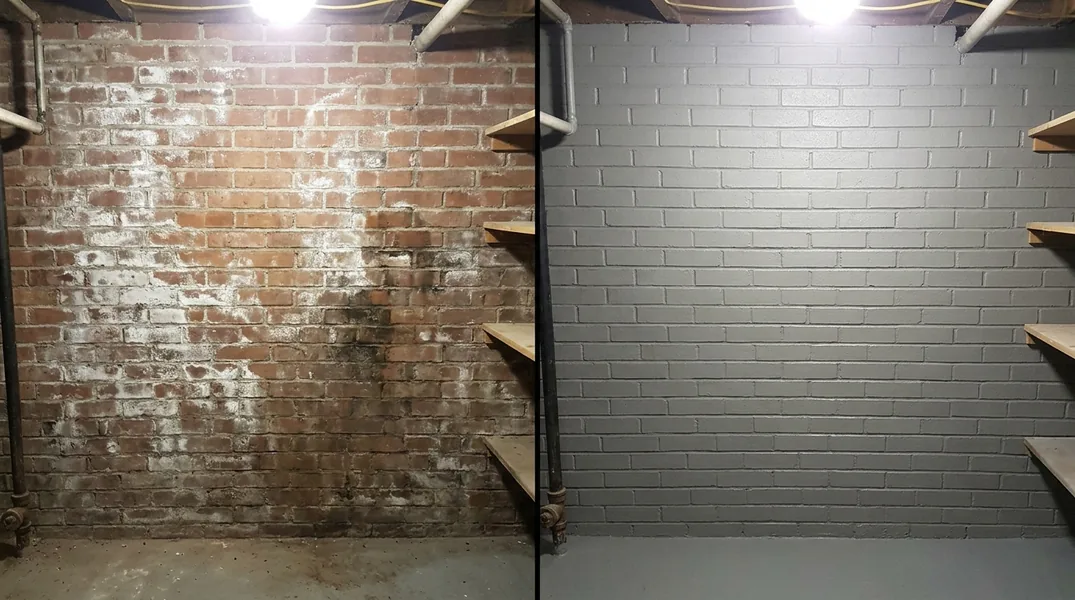
High groundwater does not always announce itself with a puddle. It can show up as a white powdery residue on the walls, a musty smell, efflorescence on brick, or dampness along the base of the foundation. In some cases, water seeps up through the floor slab rather than through the walls. This is why a proper assessment matters. A contractor who understands local geology can tell you whether your issue is surface water, groundwater, or both, and recommend the right fix, whether that is an Interior Drain Tile System, exterior drainage, or a combination of approaches.
Signs Your Washington Basement Needs Help
Not every basement leak is obvious. Some homeowners only notice a problem when they smell mildew or see paint peeling off the lower walls. Others find water pooling after a storm but assume it is a one-time event. In reality, basement leaks in DC tend to get worse over time. Small cracks widen, mortar softens, and the soil around the foundation becomes more saturated with each passing season. Catching the signs early can save you thousands of dollars in structural repairs.
Watch for efflorescence (the chalky white stains on masonry), rust on metal fixtures, warped baseboards, and musty odors that do not go away with ventilation. If you see water stains on the walls or floor, or if you notice that the soil outside slopes toward the house, it is worth getting a professional opinion. A Foundation Waterproofing specialist can identify the source of the moisture and recommend a solution that fits your home and budget. For homeowners in Silver Spring and across the District, the right fix often involves addressing both the water outside and the drainage inside.
Basement Waterproofing Near Me: When to Call a Pro
Some homeowners try to solve basement moisture with a coat of sealant or a dehumidifier. Those measures can help with minor dampness, but they do not address the root cause. If your basement leaks after every heavy rain, if you see cracks that are widening, or if you have standing water, it is time to call a professional. A proper inspection will look at the soil, the grading, the foundation walls, and the drainage system as a whole. The goal is not just to stop the water you see today but to prevent the damage that comes from years of hidden moisture.
Washington Waterproofing serves homeowners throughout Washington and the surrounding areas. Whether you need a Exterior Basement Waterproofing solution to redirect water away from your foundation or an interior system to manage hydrostatic pressure, the team can walk you through your options. You can call (771) 240-2593 to speak with someone directly or request a free estimate online. It is also worth asking about pricing upfront so you know what to expect before any work begins.
Protecting Your Home from DC's Unique Water Challenges
Living in Washington means living with clay soil, high groundwater, and the legacy of buried streams. Those conditions are not going away, but that does not mean your basement has to stay wet. The most effective approach is to address the problem at its source. That might mean improving drainage around the foundation, sealing cracks, installing a sump pump, or adding an interior drain tile system. In some cases, exterior waterproofing is the best long-term solution, especially if the soil around your home is consistently saturated.
The key is to act before small problems become expensive ones. A dry basement protects not just your stored belongings but also the structural integrity of your home. If you have noticed any of the signs mentioned above, or if you simply want peace of mind, reach out to Washington Waterproofing at (771) 240-2593. The team understands the local geology and can help you choose the right solution for your home, whether you are in Washington, Alexandria, or the surrounding neighborhoods.
Looking for a professional basement waterproofing contractor in Washington? Washington Waterproofing responds fast for all your basement waterproofing needs.
Get a Free QuoteOur services: Basement Waterproofing · Interior Drain Tile System · Exterior Basement Waterproofing